· @Rashmitha Perera
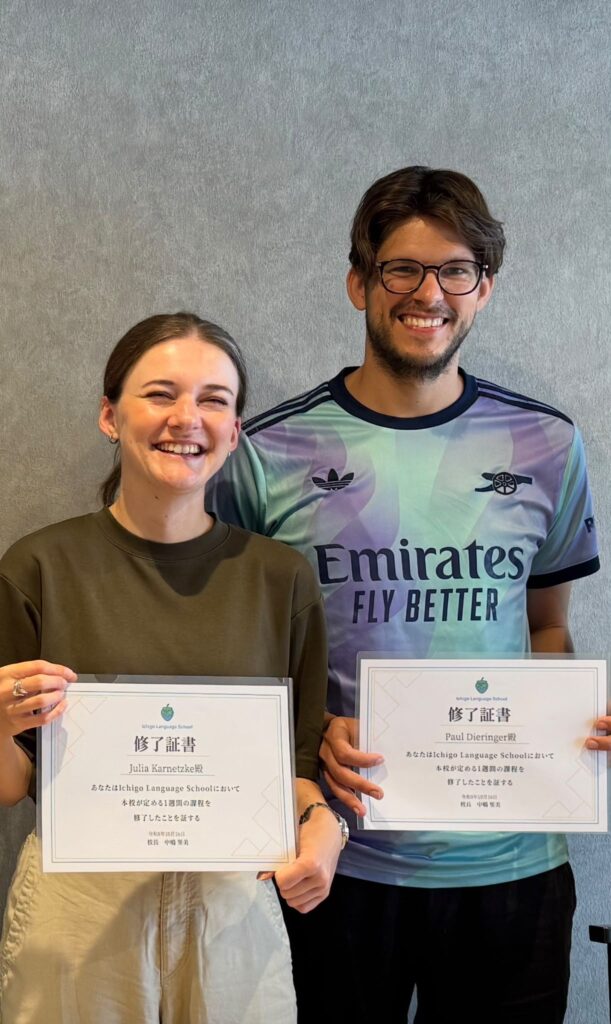
Some guests leave footprints that stay long after they’ve gone. Paul and Julia are two of those guests.
When the German couple arrived for our Cultural Course, we weren’t sure what to expect — no strangers to travel but new to immersive cultural study, arriving with genuine curiosity and a lot of enthusiasm. What we got was a week that reminded us why we do what we do. Five days of real moments, real laughter, and real connection — the kind you can’t plan but somehow always seem to find when the right people show up.
An Evening Among the Yatais
On one of our last evenings together, we headed out to the yatais — those small, warm, glowing street food stalls that come alive as the sun goes down. If you’ve never sat shoulder-to-shoulder at a yatai counter with the smell of broth in the air and the sound of the city humming around you, you haven’t quite understood what evenings in Japan can feel like.
Julia had one very specific mission: she wanted to try oden. Turns out she’s a One Piece fan, and oden holds a special place in that world — so there was no negotiating on that one. She loved it. Paul, being vegetarian, needed a little more creative navigation through the menu, but we found him plenty to enjoy. At one point I ended up sharing my ramen bowl with him, which felt like exactly the right thing to do at a yatai — that kind of easy, unplanned sharing is just part of the atmosphere.
That evening felt like a real initiation. Not a tourist experience — just a real night out, shared with real people, over good food.
The Mochi Pounding
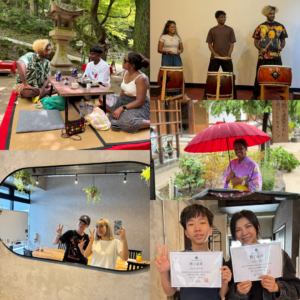
Early in the week, we did mochi pounding — and it set the tone for everything that followed. It was about feeling it.
Here’s how mochitsuki works: one person pounds with the heavy mallet, another wets and folds the dough in between strikes — and you have to move fast, in rhythm, without hesitation. Paul and Julia took on the pounding while our instructor handled the folding and spreading. With only two people it gets tiring fast, so I jumped in too and we kept rotating, keeping the pace up without letting the intervals drag. That constant rhythm is what makes the mochi soft — and ours came out beautifully. We ate it together while it was still warm, and it was genuinely delicious.
But the real surprise came from the instructor himself. As it turns out, he also plays taiko drums — and partway through the session he gave Paul and Julia something they weren’t expecting: a short taiko demonstration, and then an invitation to try it themselves. The look on their faces when they first struck the drum was something else entirely. They also got to share the whole day with the other students in the group, which made the energy even better — everyone learning together, rotating in, and celebrating at the end over fresh mochi.
More Than a Language Class
Paul and Julia came to learn Japanese, and they did — but what surprised them (and us) was how much more they ended up absorbing.
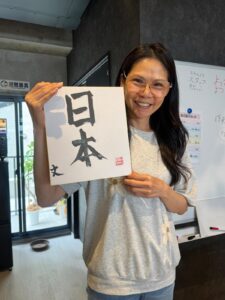
The language lessons were woven into everything. We didn’t just sit at a table and study grammar — we learned the word for the stall owner’s ladle at the yatai, the phrase you shout during mochi pounding, how to order food, how to thank someone properly, and why bowing has nothing to do with submission and everything to do with respect. Culture and history came in the same breath. We talked about Japan’s relationship with seasons and why autumn is a time for reflection. We sat with old photographs and talked about what Japan looked like before the war, and how those yatai traditions trace back through generations of craftspeople who set up stalls after long days of work.
By the end of the week, Paul had a small notebook full of hiragana and Julia was practicing her keigo — polite Japanese — on anyone willing to listen. But more than the words, they left understanding why things are the way they are here. That’s the part that sticks.
Until Next Time, Paul & Julia
On their final day, we sat together and talked about what had stood out most. Paul said it was the mochi — the physical memory of it, how it stayed in his arms the next day. Julia said it was a quiet moment at the yatai when the rain started and everyone shuffled a little closer under the noren curtain and nobody minded at all.
We minded them, very much. They were exactly the kind of guests that make teaching feel like a privilege — open, curious, warm, and completely present for every moment.
If you’re thinking about our Cultural Course, know that experiences like this are what it’s built for: not a tour, not a checklist, but a real week inside Japanese life, history, and culture, guided by people who love this country and want to share it properly.
Paul and Julia, danke — and mata ne. 🌸